
Why Don't I Feel Safe in Relationships, Even When I Know I'm Safe?
You might know you're safe in a relationship, yet still find yourself anticipating rejection, overthinking conversations or pulling away. Explore how earlier relational experiences can shape the protective parts of us, and why knowing we're safe doesn't always mean feeling safe.

You can know that a relationship is safe and still not feel safe because parts of you may be responding to what relationships have taught you to expect, rather than only to what is happening now.
You might trust the person you're with. You might know they care about you. There may be no obvious threat in the relationship at all.
Yet a change in their tone, a disagreement, a delayed reply or a feeling that they're disappointed in you can bring up a response that feels much bigger than what is happening in the moment.
You might find yourself overthinking what you said, looking for signs something is wrong, needing reassurance, shutting down, pulling away or preparing yourself for rejection.
Part of you might even be thinking:
I know I'm safe. So why am I reacting like this?
Sometimes, the answer isn't only in what is happening now.
When past relationships shape what we expect now
Relational trauma isn't only about the things that happened to us. It can also be shaped by what we needed in relationships and didn't consistently receive.
Safety. Comfort. Protection. Validation. Attunement. Having our feelings taken seriously. Being able to need another person without that need being ignored, criticised or becoming too much.
When important relationships have instead involved unpredictability, criticism, rejection, emotional absence or fear, we can learn ways of protecting ourselves.
Keep the peace.
Don't need too much.
Watch for changes.
Don't let people get too close.
Deal with things yourself.
Those responses don't necessarily disappear simply because our circumstances change.
Why can something small feel so big?
I often think about this through a parts-informed lens.
There might be a part of you that watches closely for rejection. A part that works hard to keep everyone happy. A part that withdraws before somebody can hurt you. Or a younger part that still carries fear, loneliness or hurt from earlier experiences.
Sometimes something happening now becomes a cue for something learnt then.
A change in your partner's tone may simply be a change in tone. But a part of you may recognise something familiar and begin preparing for what it learnt could come next.
That's one reason telling yourself “I'm safe” doesn't always make the feeling disappear.
One part of you may know that you're safe now. Another part may not know it yet.
Can therapy help me feel safer in relationships?
Therapy doesn't have to be about trying to convince these responses to go away.
Instead, we can become curious about the parts of you that continue to protect, what they are responding to, and what they might need to begin to experience something different now.
In my work, I draw on parts-informed therapy (Resource Therapy)and Relational Integrative EMDR. We work at a pace that feels manageable, with attention to safety, the therapeutic relationship and what your protective parts may need along the way.
Sometimes this might include gently exploring earlier experiences connected with the responses that continue to show up now, while creating space for what may not have been available then: safety, protection, validation, connection or choice.
The aim isn't to erase what happened.
It's to create more space to respond to the relationship you're in now, rather than only from what relationships have taught you to expect.
Written by Jaclyn Hall
Jaclyn Hall is a PACFA Accredited Clinical Counsellor, PACFA Certified Supervisor, EMDRAA Accredited EMDR Practitioner and Advanced Clinical Resource Therapist.
Jaclyn is the founder of Calm, Connect & Heal Therapeutic Services, based in Blaxland in the Blue Mountains, NSW. She specialises in trauma and relational trauma, drawing on parts-informed approaches, Resource Therapy and Relational Integrative EMDR.
She offers counselling, EMDR therapy, clinical supervision and professional training, with services available in person and online.
Disclaimer: This article provides general information and is not a substitute for individual mental health advice.

Why Imagination Matters in Trauma Therapy
An exploration of imagination, imagery rescripting and relational healing in trauma therapy, and how the nervous system can respond to imagined experiences in meaningful ways.
Have you ever wondered why your therapist invites you to imagine safety, comfort or protection, even though you cannot change the past?
Many people pause when imagination is introduced in therapy.
It can sound like pretending. And if you have lived through trauma, the last thing you want is to feel like your experience is being dismissed, minimised or rewritten.
But imagination in trauma therapy is not about denying what happened.
It is about helping the nervous system experience elements that may have been missing at the time: safety, comfort, protection, connection or choice.
In trauma, the body can remain caught in unfinished survival responses, frozen in time, still waiting for the safety that never came.
Through approaches such as Resource Therapy, Relational Integrative EMDR and Imagery Rescripting, therapy gently revisits these experiences, not to change the facts, but to support the nervous system in experiencing something different emotionally.
An experience where support arrives.
Where the adult self can comfort the younger self.
Where the body can begin to feel what “safe enough” might be.
Research exploring skilled pianists found that when participants imagined playing the piano, many of the same brain areas involved in physically playing became active (Meister et al., 2004). Findings such as these help us better understand why imagination can feel emotionally and physiologically meaningful within therapy. Imagined experiences can influence emotions, perceptions and nervous system responses in powerful ways.
Within approaches such as imagery rescripting, Relational Integrative EMDR and Resource Therapy, imagination is not about pretending the past was different. Instead, it offers the nervous system an opportunity to experience elements that may have been missing at the time.
Research suggests imagery rescripting may help reduce trauma intrusions, soften shame and guilt, and support traumatic memories being experienced and integrated in less distressing ways.
Imagination can become a bridge between past and present, helping different parts of the self, feel seen, cared for and connected within the healing process.
Healing is not about pretending the past was different.
It is about allowing the body and nervous system the opportunity to finally experience what safety, comfort and care can feel like.

Written by Jaclyn Hall
Jaclyn Hall is a PACFA Accredited Clinical Counsellor, PACFA Certified Supervisor, EMDRAA Accredited EMDR Practitioner and Advanced Clinical Resource Therapist.
Jaclyn is the founder of Calm, Connect & Heal Therapeutic Services, based in Blaxland in the Blue Mountains, NSW. She specialises in trauma and relational trauma, drawing on parts-informed approaches, Resource Therapy and Relational Integrative EMDR.
She offers counselling, EMDR therapy, clinical supervision and professional training, with services available in person and online.
Disclaimer: This article provides general information and is not a substitute for individual mental health advice.

The Gatekeepers to Healing: Understanding Protector Parts in Trauma Therapy
A trauma-informed exploration of protector parts, survival responses and relational safety through the lens of Resource Therapy and parts-informed trauma therapy.
In the sacred journey of healing trauma, there are parts of us that step forward not to harm, but to protect.
These protector parts have carried the weight of survival — often in silence, often alone. They’ve made impossible choices, built walls, guarded wounds, and worked tirelessly to keep the most vulnerable parts of us safe.
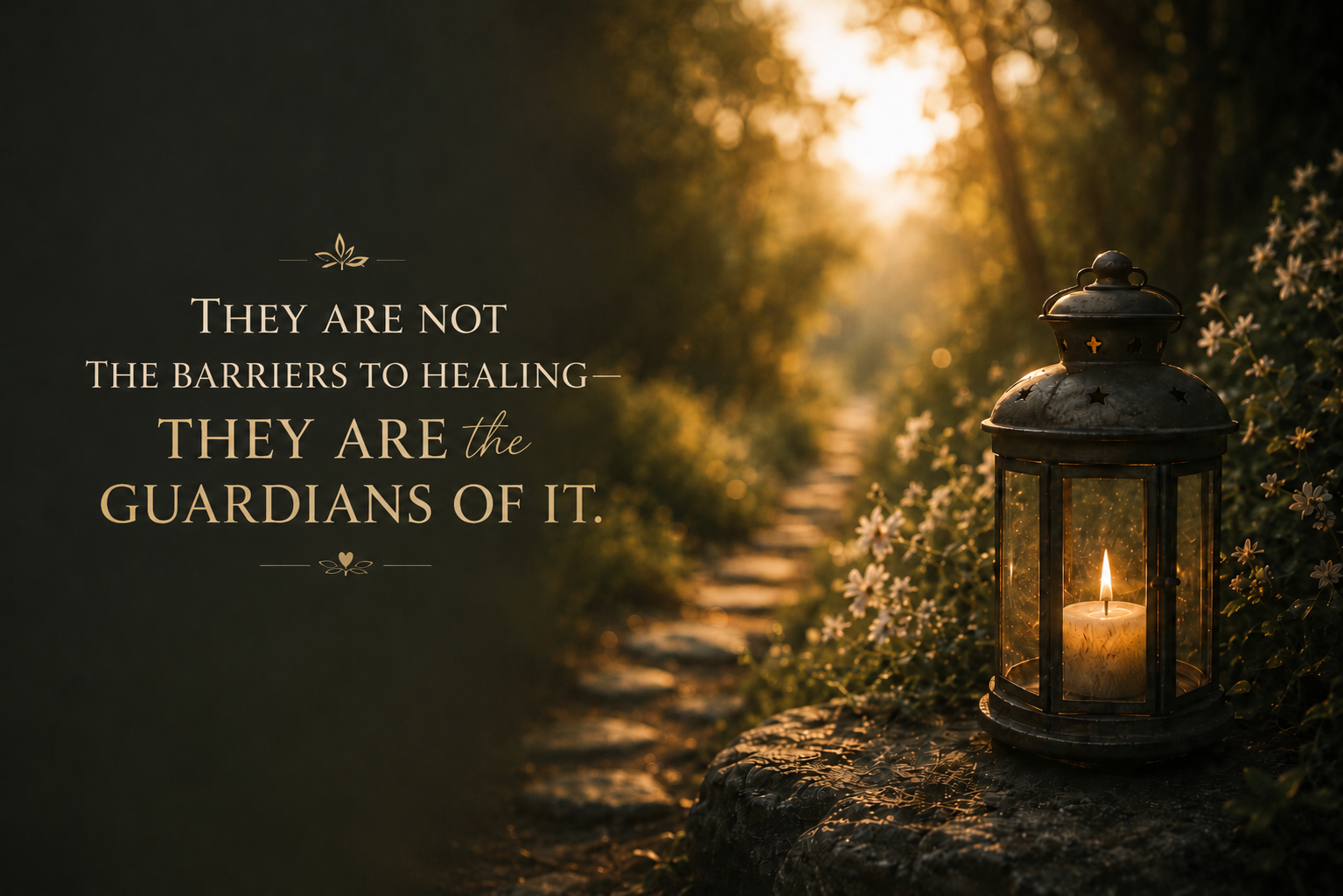
They are not barriers to healing —
they are the guardians of it.
Within trauma-informed approaches such as Resource Therapy and Relational Integrative EMDR, these protective responses are understood not as resistance, but as adaptive survival responses shaped through trauma, attachment wounds and the need for safety.
To earn their trust is not to bypass them, but to pause… to listen.
To understand why they do what they do.
To hear their fears, their needs, their stories.
Trust cannot be demanded from protector parts.
It must be earned through consistency, respect, relational safety and attuned therapeutic presence.
When they begin to trust — truly trust — something incredible happens:
They soften.
They step back.
They let healing in.
Healing is not possible, nor is it ethical, to attempt to overpower or push through protector parts.
Instead, healing often begins through curiosity, compassion and collaboration with the inner system.
In Resource Therapy and Relational Integrative EMDR, we do not force change —
we work collaboratively with the inner system,
bringing every voice to the table with dignity.
So we thank the protectors.
For their service.
For their strength.
For their fierce love.
And we remind them:
You are no longer alone.
And together we heal.
Written by Jaclyn Hall
Jaclyn Hall is a PACFA Accredited Clinical Counsellor, PACFA Certified Supervisor, EMDRAA Accredited EMDR Practitioner and Advanced Clinical Resource Therapist.
Jaclyn is the founder of Calm, Connect & Heal Therapeutic Services, based in Blaxland in the Blue Mountains, NSW. She specialises in trauma and relational trauma, drawing on parts-informed approaches, Resource Therapy and Relational Integrative EMDR.
She offers counselling, EMDR therapy, clinical supervision and professional training, with services available in person and online.
Disclaimer: This article provides general information and is not a substitute for individual mental health advice.

When Every Part Has a Story: Understanding Resource Therapy and Parts Work
A trauma-informed exploration of Resource Therapy and parts work, understanding how protective states develop through survival, attachment wounds and relational trauma.
As therapists, we sit with complexity every day. Clients often describe feeling pulled in different directions. One part of them wants change, another holds back. One-part longs for connection, another expects harm.
We are often witnessing a system of resource states. It is not resistance. These states do exactly what they have learned to do to manage and survive.
For me, Resource Therapy (RT) has offered a way of understanding this. It is not something to fix. It is something to listen to. Resource Therapy has shaped how I understand the internal system.
It has also shaped how I respond to the present resource state. When we slow down, what becomes clear is this: every resource state has a story.
I’ve never been drawn to ways of working that centre heavily on diagnosis or pathologising. It’s not that understanding patterns isn’t important but framing people through what is “wrong” with them has never felt like it honours the depth of what they’ve lived through.

Jaclyn Hall, Advanced Clinical Resource Therapist and Trainer.
I’ve always been interested in understanding what’s happened to a person, how they’ve survived, and what has supported them to get through.
Importantly, what they are now wanting to shift so they can live from a place of their own choosing, rather than from responses that may no longer be serving them.
Resource Therapy aligns deeply with this.
Resource Therapy Diagnosis
While RT includes classification of resource states, I don’t experience this as labelling the person. Rather, classification helps guide the therapeutic process. It supports the therapist in understanding the function of the part. This knowledge helps to select appropriate RT therapeutic actions.
At its core, RT is concerned with understanding function, not assigning fault.
RT understands personality as a system of resource states. At any given time, one resource state is in the conscious, the part that is present and engaging. Each resource state holds its own experiences, responses, and role within the system.
Each part has a purpose. Parts holding outdated behaviours or heavy emotions can easily be understood in the context of what a person has lived through.
This has influenced the way I listen. Rather than moving too quickly toward change, I am listening for which state is in the conscious, and what that state is ready to change today.
In my opinion, one of the most meaningful moments in therapy is when a resource state feels understood.
Often, what presents is not just a thought or behaviour, but a lived internal experience that has been carried, at times, for many years.
A look, a tone, a moment of disconnection can activate something younger, perhaps a resource state holding the experience of not mattering, of being too much, or not enough.
A state that learned to retreat, fight to be heard, to stay quiet, or to hold everything inside.
When we offer compassionate responses, like saying, “That makes so much sense… this state has taken on this role, and has worked to protect in this way,” we can notice a shift.
The system may soften. The urgency may reduce. Shame appears to lessen. Not because anything has been “fixed,” but because something this part carries has been understood and acknowledged. This often leads to opening a doorway to deeper healing.
My Experience Working with Resource Therapy
In my Clinical work as a therapist and supervisor of counsellors, I have had the privilege of hearing the stories of highly insightful clients who have understood their history. Many who could see the links between what has happened and how they respond now.
Yet, they have continued to seek more from their healing journey, but something hadn’t quite clicked.
What I have come to understand is that insight alone does not necessarily lead to change. Why? Because insight often comes from a different resource state, knowledge and not the part holding the distress and emotional pain.
Resource Therapy provides a way of working directly with the resource state holding the experience, which is where shifts may begin to occur.
This is a key component to therapeutic change.
This is especially vital in trauma work, where protective resource states are often strong. They may avoid, distract, control, or limit access to distressing material. From the outside, these may come across as barriers.
Within RT, they are understood as serving an important function. These states have developed for a reason. They are doing what they have learned to do, to protect the system.
In RT, we work with them in a trauma-informed manner. We seek to understand their role. We respect their function. We support the conditions for other resource states to come into the conscious when appropriate. This supports safety, pacing, and readiness within the work.
What this can feel like internally is not always easy to capture in clinical language. At times, it is better understood through the expressed lived experience held within a resource state.
Resource Therapy has deeply influenced the way I understand both people and the process of therapeutic change.
It has deepened my focus on listening to the system, to the resource state that is present, and to what may be needed in that moment.
We participate in this work by honouring the story of each Resource State. When that story is deeply heard, something can shift. There can be less shame, more compassion and a greater capacity for change. Not by overriding the system, but by working with it.
Written by Jaclyn Hall
Jaclyn Hall is a PACFA Accredited Clinical Counsellor, PACFA Certified Supervisor, EMDRAA Accredited EMDR Practitioner and Advanced Clinical Resource Therapist.
Jaclyn is the founder of Calm, Connect & Heal Therapeutic Services, based in Blaxland in the Blue Mountains, NSW. She specialises in trauma and relational trauma, drawing on parts-informed approaches, Resource Therapy and Relational Integrative EMDR.
She offers counselling, EMDR therapy, clinical supervision and professional training, with services available in person and online.
Disclaimer: This article provides general information and is not a substitute for individual mental health advice.
Professional Resources
Below are a selection of professional organisations and educational resources related to trauma therapy, EMDR, counselling, dissociation and mental health support.
EMDRAA – EMDR Association of Australia
https://emdraa.orgPACFA – Psychotherapy and Counselling Federation of Australia
https://pacfa.org.auBlue Knot Foundation
https://blueknot.org.au
Crisis & Immediate Support
If you or someone you know requires immediate mental health support, the following services are available:
NSW Mental Health Line (24/7)
1800 011 511Lifeline Australia
13 11 14
https://lifeline.org.au1800RESPECT
1800 737 732
https://1800respect.org.au
If you are in immediate danger or require urgent assistance, call 000.