
Why Don't I Feel Safe in Relationships, Even When I Know I'm Safe?
You might know you're safe in a relationship, yet still find yourself anticipating rejection, overthinking conversations or pulling away. Explore how earlier relational experiences can shape the protective parts of us, and why knowing we're safe doesn't always mean feeling safe.
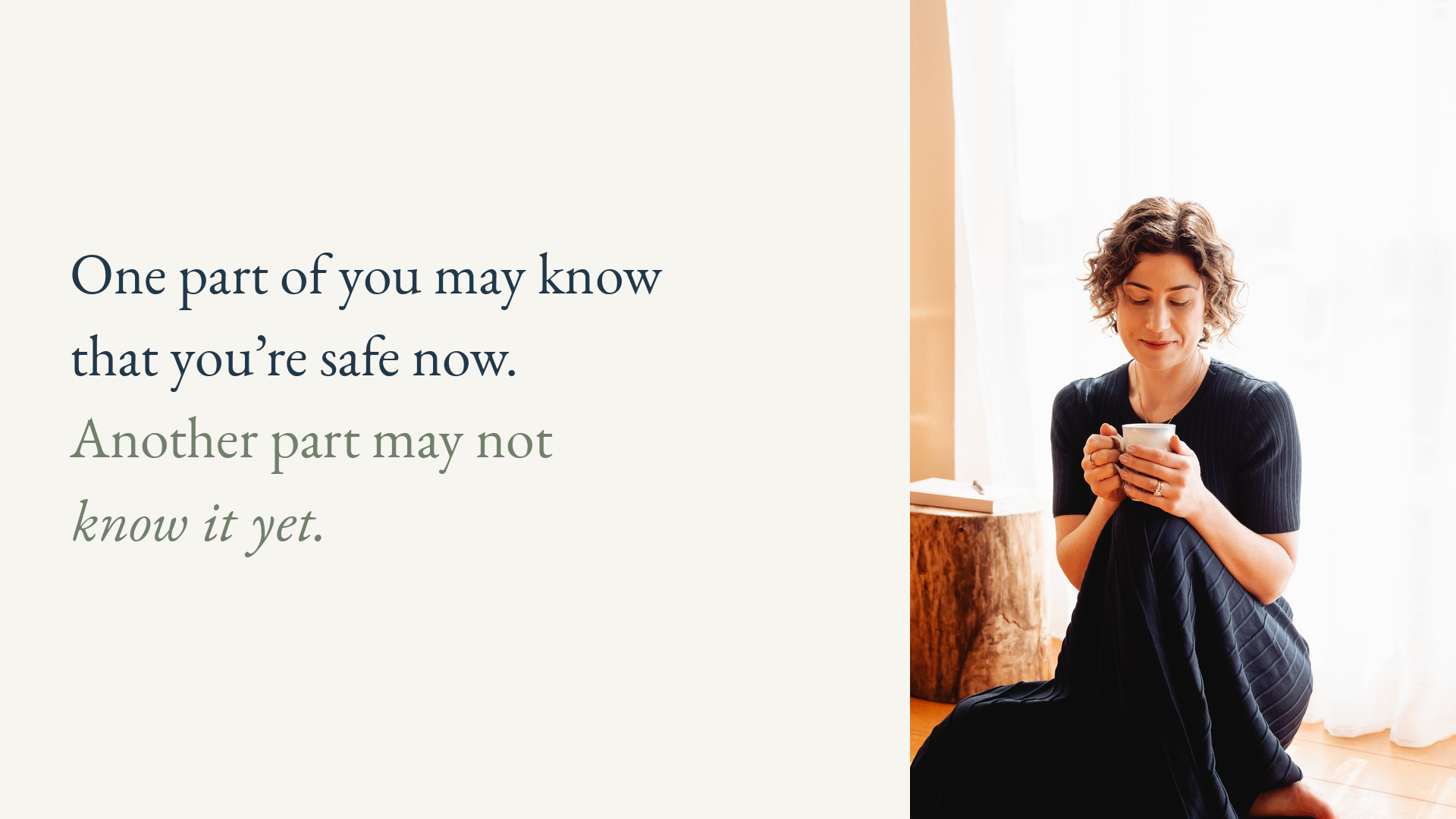
You can know that a relationship is safe and still not feel safe because parts of you may be responding to what relationships have taught you to expect, rather than only to what is happening now.
You might trust the person you're with. You might know they care about you. There may be no obvious threat in the relationship at all.
Yet a change in their tone, a disagreement, a delayed reply or a feeling that they're disappointed in you can bring up a response that feels much bigger than what is happening in the moment.
You might find yourself overthinking what you said, looking for signs something is wrong, needing reassurance, shutting down, pulling away or preparing yourself for rejection.
Part of you might even be thinking:
I know I'm safe. So why am I reacting like this?
Sometimes, the answer isn't only in what is happening now.
When past relationships shape what we expect now
Relational trauma isn't only about the things that happened to us. It can also be shaped by what we needed in relationships and didn't consistently receive.
Safety. Comfort. Protection. Validation. Attunement. Having our feelings taken seriously. Being able to need another person without that need being ignored, criticised or becoming too much.
When important relationships have instead involved unpredictability, criticism, rejection, emotional absence or fear, we can learn ways of protecting ourselves.
Keep the peace.
Don't need too much.
Watch for changes.
Don't let people get too close.
Deal with things yourself.
Those responses don't necessarily disappear simply because our circumstances change.
Why can something small feel so big?
I often think about this through a parts-informed lens.
There might be a part of you that watches closely for rejection. A part that works hard to keep everyone happy. A part that withdraws before somebody can hurt you. Or a younger part that still carries fear, loneliness or hurt from earlier experiences.
Sometimes something happening now becomes a cue for something learnt then.
A change in your partner's tone may simply be a change in tone. But a part of you may recognise something familiar and begin preparing for what it learnt could come next.
That's one reason telling yourself “I'm safe” doesn't always make the feeling disappear.
One part of you may know that you're safe now. Another part may not know it yet.
Can therapy help me feel safer in relationships?
Therapy doesn't have to be about trying to convince these responses to go away.
Instead, we can become curious about the parts of you that continue to protect, what they are responding to, and what they might need to begin to experience something different now.
In my work, I draw on parts-informed therapy (Resource Therapy)and Relational Integrative EMDR. We work at a pace that feels manageable, with attention to safety, the therapeutic relationship and what your protective parts may need along the way.
Sometimes this might include gently exploring earlier experiences connected with the responses that continue to show up now, while creating space for what may not have been available then: safety, protection, validation, connection or choice.
The aim isn't to erase what happened.
It's to create more space to respond to the relationship you're in now, rather than only from what relationships have taught you to expect.
Written by Jaclyn Hall
Jaclyn Hall is a PACFA Accredited Clinical Counsellor, PACFA Certified Supervisor, EMDRAA Accredited EMDR Practitioner and Advanced Clinical Resource Therapist.
Jaclyn is the founder of Calm, Connect & Heal Therapeutic Services, based in Blaxland in the Blue Mountains, NSW. She specialises in trauma and relational trauma, drawing on parts-informed approaches, Resource Therapy and Relational Integrative EMDR.
She offers counselling, EMDR therapy, clinical supervision and professional training, with services available in person and online.
Disclaimer: This article provides general information and is not a substitute for individual mental health advice.
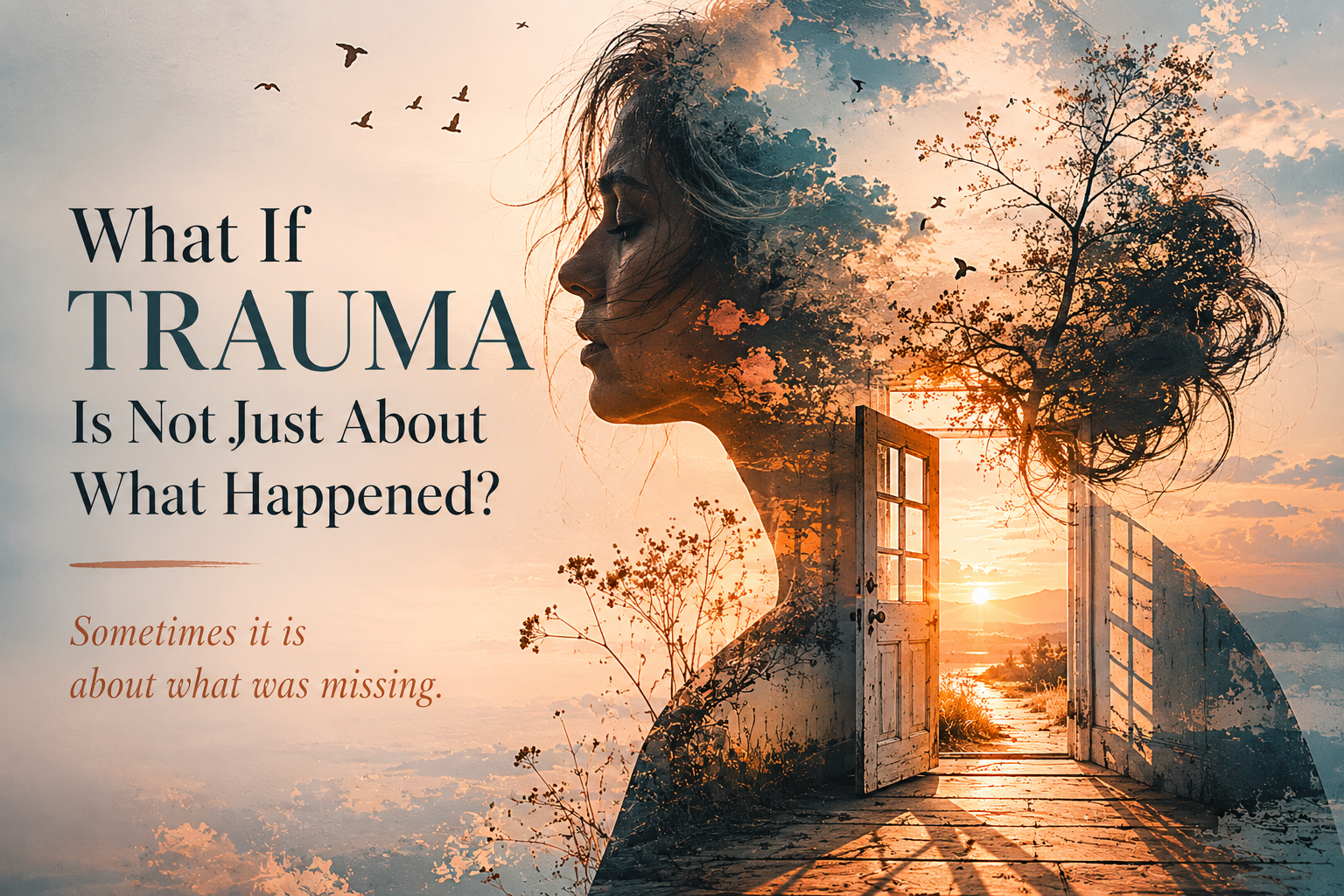
What If Trauma Is Not Just About What Happened?
Trauma isn't only about what happened to us. Sometimes, it's also about what we needed but didn't receive. Explore how experiences of emotional absence, disconnection and unmet relational needs can shape the way we experience ourselves and our relationships, even years later.
Understanding Relational Trauma, Emotional Safety, and the Lasting Impact of What Was Missing
When people hear the word trauma, they often think of something obvious.
A single event.
A moment in time.
Something visible.
Something undeniable.
But relational trauma is not always about what happened.
Sometimes it is about what was missing.
The absence of emotional safety.
The absence of attunement.
The absence of repair after rupture.
The absence of feeling consistently soothed, protected, emotionally held, or deeply seen within relationships that mattered.
Many people spend years trying to make sense of why they feel the way they do, particularly when they cannot point to one obvious or catastrophic event.
They say:
“Nothing terrible happened.”
“My parents loved me.”
“Others had it worse.”
“They did their best.”
“I shouldn’t still be affected by this.”
And often, those things may all hold truth.
Relational trauma is rarely as simple as “good” or “bad” families.
Many people grew up within environments shaped by stress, overwhelm, unresolved trauma, emotional absence, unpredictability, addiction, family violence, grief, or caregivers carrying burdens of their own.
Some were also victim survivors themselves.
And relational trauma is not limited to childhood.
It can emerge through domestic and family violence.
Coercive control.
Emotionally unsafe relationships.
Bullying.
Relational betrayal.
Experiences that leave someone feeling violated, powerless, unsafe, unseen, or alone within relationships that should have offered care, protection, or safety.
As Dr Gabor Maté writes, trauma is not simply about what happens to us, but what happens within us as a result of those experiences.
Those relational experiences can quietly become part of the structure beneath us.
Like the framework of a house, they shape many of the patterns we carry through life — our relationship with ourselves, with other people, and with the world around us.
Over time, these experiences can shape the beliefs people carry about themselves and others.
Beliefs like:
“I don’t matter.”
“Relationships aren’t safe.”
“My emotions are too much.”
“I have to cope alone.”
They can also shape the ways people learn to survive.
Minimising emotions after they have been repeatedly dismissed.
Staying hyperaware of other people’s needs while disconnecting from their own.
Learning to stay small, self sufficient, agreeable, emotionally guarded, or constantly braced for rejection, conflict, danger, or disconnection.
Sometimes people are not looking for therapy because they lack insight.
They may already deeply understand what has happened in their lives.
What can feel exhausting is the ongoing impact of it — particularly when there is a gap between logically knowing something is over, while emotionally, relationally, or physically still feeling caught in it.
Sometimes people know the relationship ended years ago, yet still feel fear when their phone lights up.
Sometimes they learned so early to minimise their own needs, emotions, or pain that they no longer recognise how much they have been carrying alone.
And sometimes healing begins through finally giving language to what the body has known for a very long time.
Because healing is not simply about insight.
Often, it is about changing someone’s relationship with the experiences, emotions, beliefs, and protective responses they have carried for a very long time.
Sometimes it means beginning to gently notice what those younger parts of themselves needed, but never received.
Safety.
Protection.
Comfort.
Attunement.
Care.
And slowly finding ways to offer some of that to themselves now.
Sometimes it means finally offering care and protection to the parts of themselves that carried those experiences alone.
And healing can mean no longer needing to survive in the same ways they once did.
Written by Jaclyn Hall
Jaclyn Hall is a PACFA Accredited Clinical Counsellor, PACFA Certified Supervisor, EMDRAA Accredited EMDR Practitioner and Advanced Clinical Resource Therapist.
Jaclyn is the founder of Calm, Connect & Heal Therapeutic Services, based in Blaxland in the Blue Mountains, NSW. She specialises in trauma and relational trauma, drawing on parts-informed approaches, Resource Therapy and Relational Integrative EMDR.
She offers counselling, EMDR therapy, clinical supervision and professional training, with services available in person and online.
Disclaimer: This article provides general information and is not a substitute for individual mental health advice.

Why Imagination Matters in Trauma Therapy
An exploration of imagination, imagery rescripting and relational healing in trauma therapy, and how the nervous system can respond to imagined experiences in meaningful ways.
Have you ever wondered why your therapist invites you to imagine safety, comfort or protection, even though you cannot change the past?
Many people pause when imagination is introduced in therapy.
It can sound like pretending. And if you have lived through trauma, the last thing you want is to feel like your experience is being dismissed, minimised or rewritten.
But imagination in trauma therapy is not about denying what happened.
It is about helping the nervous system experience elements that may have been missing at the time: safety, comfort, protection, connection or choice.
In trauma, the body can remain caught in unfinished survival responses, frozen in time, still waiting for the safety that never came.
Through approaches such as Resource Therapy, Relational Integrative EMDR and Imagery Rescripting, therapy gently revisits these experiences, not to change the facts, but to support the nervous system in experiencing something different emotionally.
An experience where support arrives.
Where the adult self can comfort the younger self.
Where the body can begin to feel what “safe enough” might be.
Research exploring skilled pianists found that when participants imagined playing the piano, many of the same brain areas involved in physically playing became active (Meister et al., 2004). Findings such as these help us better understand why imagination can feel emotionally and physiologically meaningful within therapy. Imagined experiences can influence emotions, perceptions and nervous system responses in powerful ways.
Within approaches such as imagery rescripting, Relational Integrative EMDR and Resource Therapy, imagination is not about pretending the past was different. Instead, it offers the nervous system an opportunity to experience elements that may have been missing at the time.
Research suggests imagery rescripting may help reduce trauma intrusions, soften shame and guilt, and support traumatic memories being experienced and integrated in less distressing ways.
Imagination can become a bridge between past and present, helping different parts of the self, feel seen, cared for and connected within the healing process.
Healing is not about pretending the past was different.
It is about allowing the body and nervous system the opportunity to finally experience what safety, comfort and care can feel like.

Written by Jaclyn Hall
Jaclyn Hall is a PACFA Accredited Clinical Counsellor, PACFA Certified Supervisor, EMDRAA Accredited EMDR Practitioner and Advanced Clinical Resource Therapist.
Jaclyn is the founder of Calm, Connect & Heal Therapeutic Services, based in Blaxland in the Blue Mountains, NSW. She specialises in trauma and relational trauma, drawing on parts-informed approaches, Resource Therapy and Relational Integrative EMDR.
She offers counselling, EMDR therapy, clinical supervision and professional training, with services available in person and online.
Disclaimer: This article provides general information and is not a substitute for individual mental health advice.
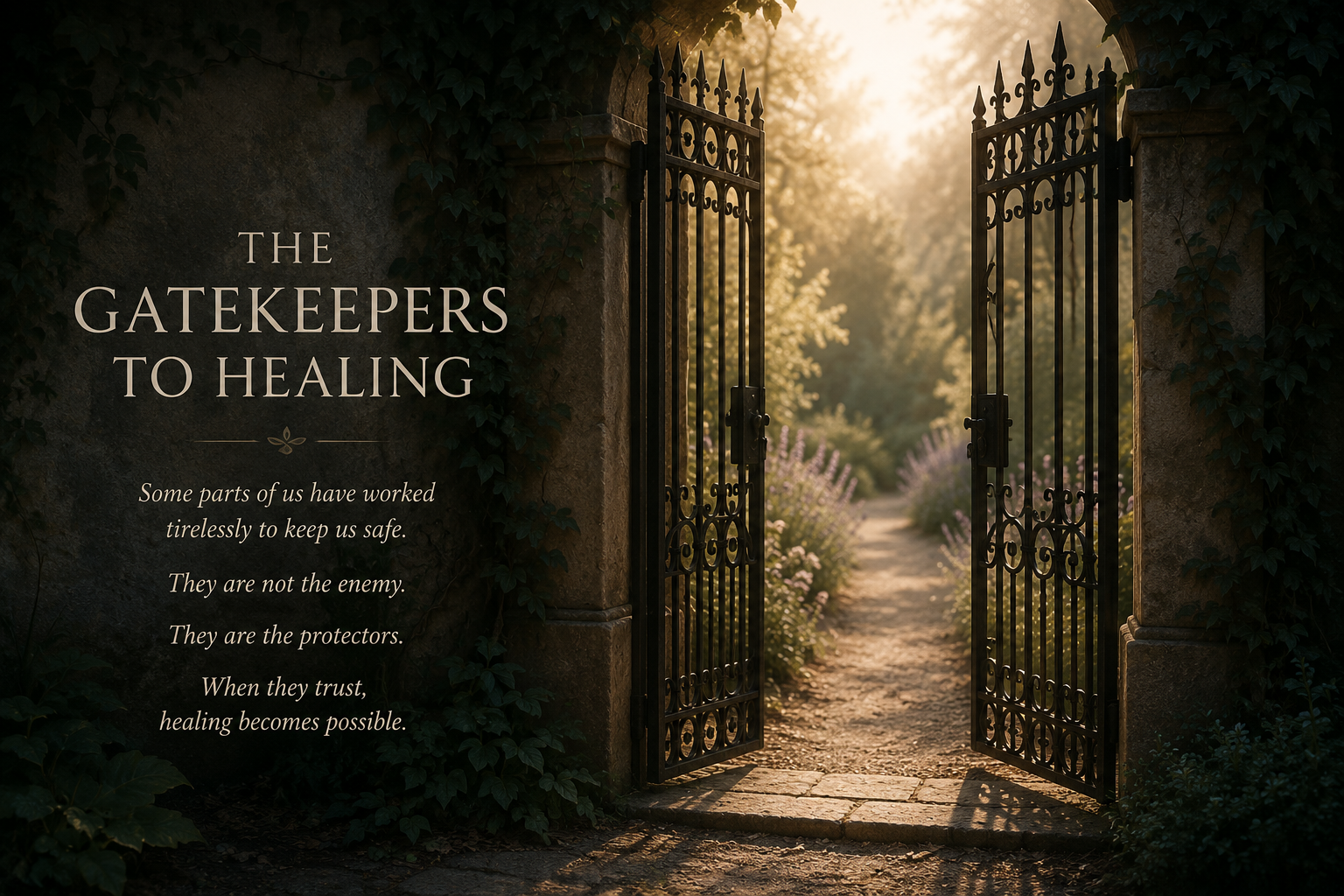
The Gatekeepers to Healing: Understanding Protector Parts in Trauma Therapy
A trauma-informed exploration of protector parts, survival responses and relational safety through the lens of Resource Therapy and parts-informed trauma therapy.
In the sacred journey of healing trauma, there are parts of us that step forward not to harm, but to protect.
These protector parts have carried the weight of survival — often in silence, often alone. They’ve made impossible choices, built walls, guarded wounds, and worked tirelessly to keep the most vulnerable parts of us safe.
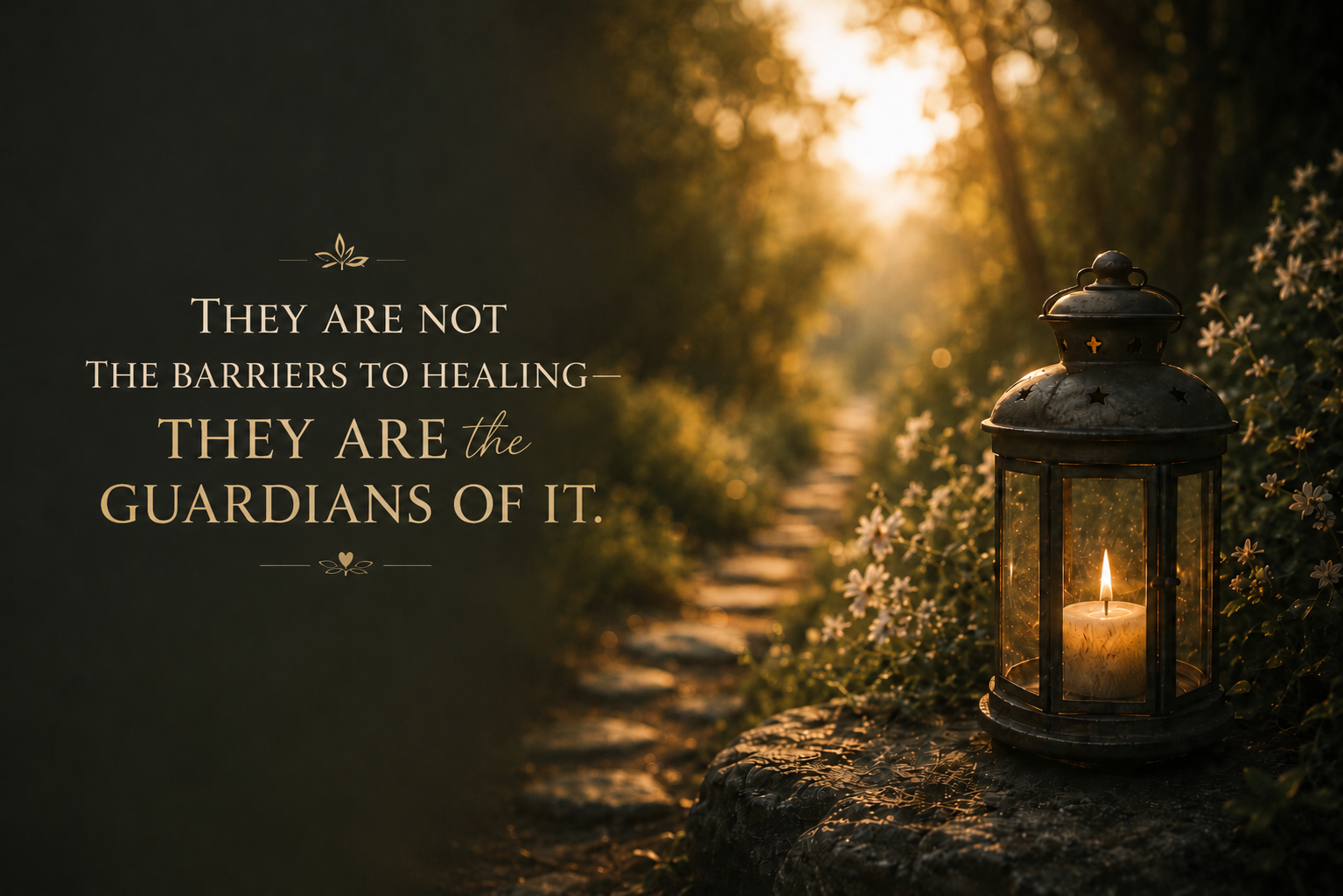
They are not barriers to healing —
they are the guardians of it.
Within trauma-informed approaches such as Resource Therapy and Relational Integrative EMDR, these protective responses are understood not as resistance, but as adaptive survival responses shaped through trauma, attachment wounds and the need for safety.
To earn their trust is not to bypass them, but to pause… to listen.
To understand why they do what they do.
To hear their fears, their needs, their stories.
Trust cannot be demanded from protector parts.
It must be earned through consistency, respect, relational safety and attuned therapeutic presence.
When they begin to trust — truly trust — something incredible happens:
They soften.
They step back.
They let healing in.
Healing is not possible, nor is it ethical, to attempt to overpower or push through protector parts.
Instead, healing often begins through curiosity, compassion and collaboration with the inner system.
In Resource Therapy and Relational Integrative EMDR, we do not force change —
we work collaboratively with the inner system,
bringing every voice to the table with dignity.
So we thank the protectors.
For their service.
For their strength.
For their fierce love.
And we remind them:
You are no longer alone.
And together we heal.
Written by Jaclyn Hall
Jaclyn Hall is a PACFA Accredited Clinical Counsellor, PACFA Certified Supervisor, EMDRAA Accredited EMDR Practitioner and Advanced Clinical Resource Therapist.
Jaclyn is the founder of Calm, Connect & Heal Therapeutic Services, based in Blaxland in the Blue Mountains, NSW. She specialises in trauma and relational trauma, drawing on parts-informed approaches, Resource Therapy and Relational Integrative EMDR.
She offers counselling, EMDR therapy, clinical supervision and professional training, with services available in person and online.
Disclaimer: This article provides general information and is not a substitute for individual mental health advice.
Professional Resources
Below are a selection of professional organisations and educational resources related to trauma therapy, EMDR, counselling, dissociation and mental health support.
EMDRAA – EMDR Association of Australia
https://emdraa.orgPACFA – Psychotherapy and Counselling Federation of Australia
https://pacfa.org.auBlue Knot Foundation
https://blueknot.org.au
Crisis & Immediate Support
If you or someone you know requires immediate mental health support, the following services are available:
NSW Mental Health Line (24/7)
1800 011 511Lifeline Australia
13 11 14
https://lifeline.org.au1800RESPECT
1800 737 732
https://1800respect.org.au
If you are in immediate danger or require urgent assistance, call 000.