
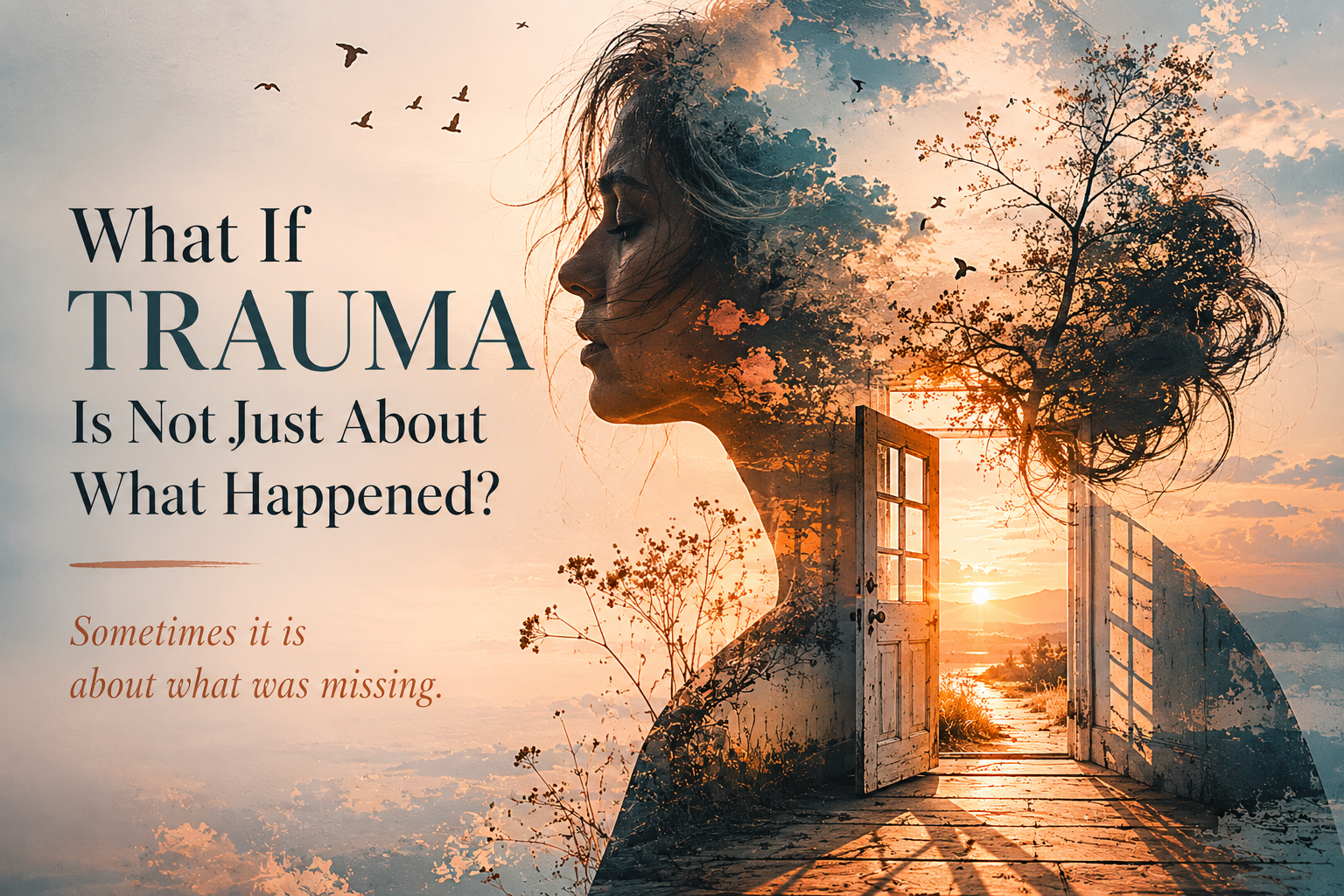
What If Trauma Is Not Just About What Happened?
Finding the right trauma therapist can feel overwhelming. This article explores what to look for in trauma-informed therapy, including safety, attachment, EMDR, and nervous system-informed support.
Understanding Relational Trauma, Emotional Safety, and the Lasting Impact of What Was Missing
When people hear the word trauma, they often think of something obvious.
A single event.
A moment in time.
Something visible.
Something undeniable.
But relational trauma is not always about what happened.
Sometimes it is about what was missing.
The absence of emotional safety.
The absence of attunement.
The absence of repair after rupture.
The absence of feeling consistently soothed, protected, emotionally held, or deeply seen within relationships that mattered.
Many people spend years trying to make sense of why they feel the way they do, particularly when they cannot point to one obvious or catastrophic event.
They say:
“Nothing terrible happened.”
“My parents loved me.”
“Others had it worse.”
“They did their best.”
“I shouldn’t still be affected by this.”
And often, those things may all hold truth.
Relational trauma is rarely as simple as “good” or “bad” families.
Many people grew up within environments shaped by stress, overwhelm, unresolved trauma, emotional absence, unpredictability, addiction, family violence, grief, or caregivers carrying burdens of their own.
Some were also victim survivors themselves.
And relational trauma is not limited to childhood.
It can emerge through domestic and family violence.
Coercive control.
Emotionally unsafe relationships.
Bullying.
Relational betrayal.
Experiences that leave someone feeling violated, powerless, unsafe, unseen, or alone within relationships that should have offered care, protection, or safety.
As Dr Gabor Maté writes, trauma is not simply about what happens to us, but what happens within us as a result of those experiences.
Those relational experiences can quietly become part of the structure beneath us.
Like the framework of a house, they shape many of the patterns we carry through life — our relationship with ourselves, with other people, and with the world around us.
Over time, these experiences can shape the beliefs people carry about themselves and others.
Beliefs like:
“I don’t matter.”
“Relationships aren’t safe.”
“My emotions are too much.”
“I have to cope alone.”
They can also shape the ways people learn to survive.
Minimising emotions after they have been repeatedly dismissed.
Staying hyperaware of other people’s needs while disconnecting from their own.
Learning to stay small, self sufficient, agreeable, emotionally guarded, or constantly braced for rejection, conflict, danger, or disconnection.
Sometimes people are not looking for therapy because they lack insight.
They may already deeply understand what has happened in their lives.
What can feel exhausting is the ongoing impact of it — particularly when there is a gap between logically knowing something is over, while emotionally, relationally, or physically still feeling caught in it.
Sometimes people know the relationship ended years ago, yet still feel fear when their phone lights up.
Sometimes they learned so early to minimise their own needs, emotions, or pain that they no longer recognise how much they have been carrying alone.
And sometimes healing begins through finally giving language to what the body has known for a very long time.
Because healing is not simply about insight.
Often, it is about changing someone’s relationship with the experiences, emotions, beliefs, and protective responses they have carried for a very long time.
Sometimes it means beginning to gently notice what those younger parts of themselves needed, but never received.
Safety.
Protection.
Comfort.
Attunement.
Care.
And slowly finding ways to offer some of that to themselves now.
Sometimes it means finally offering care and protection to the parts of themselves that carried those experiences alone.
And healing can mean no longer needing to survive in the same ways they once did.
Written by Jaclyn Hall
Jaclyn Hall is a PACFA Accredited Clinical Counsellor & Supervisor, EMDRAA Accredited EMDR Practitioner and Advanced Clinical Resource Therapist based in Blaxland in the Blue Mountains. Jaclyn provides trauma therapy, EMDR, Resource Therapy, supervision and trauma-informed training both in-person and online across Australia.
Professional Resources
Below are a selection of professional organisations and educational resources related to trauma therapy, EMDR, counselling, dissociation and mental health support.
EMDRAA – EMDR Association of Australia
https://emdraa.orgPACFA – Psychotherapy and Counselling Federation of Australia
https://pacfa.org.auBlue Knot Foundation
https://blueknot.org.au
Crisis & Immediate Support
If you or someone you know requires immediate mental health support, the following services are available:
NSW Mental Health Line (24/7)
1800 011 511Lifeline Australia
13 11 14
https://lifeline.org.au1800RESPECT
1800 737 732
https://1800respect.org.au
If you are in immediate danger or require urgent assistance, call 000.